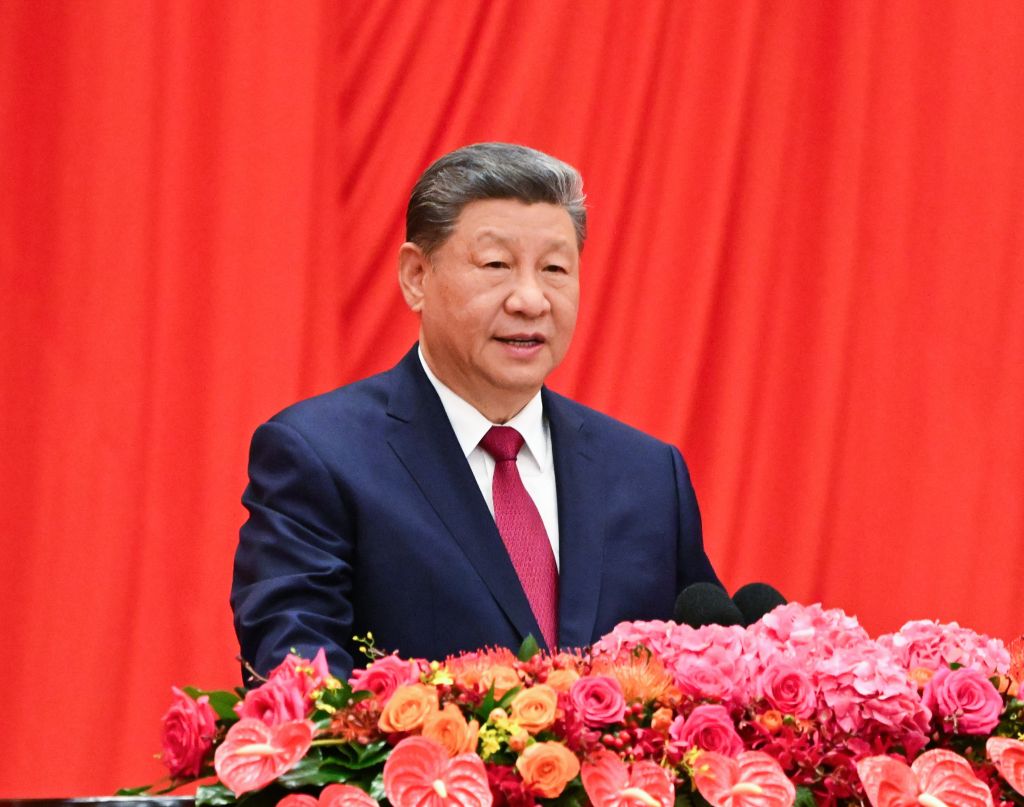
BRICS provides alternative for promotion of new solutions: Turkish scholar
« BRICS can provide an alternative for promotion of the new solutions, particularly for the Global South and developing countries, » said a Turkish scholar.
The BRICS mechanism serves as a vital platform for emerging economies to stay united and gain easier access to global trade, Zambian experts have said.
Attendees at the BRICS summit have shared their thoughts on how the expansion of BRICS can further help the global south and how China’s role plays in promoting multilateralism through the BRICS mechanism.
A South African educator living in China’s Xiamen is impressed by the fast development of the Chinese city and expects more cultural and educational exchanges among BRICS countries.
« The BRICS countries have played an important and unique role in leading the global South and promoting multilateralism. Among this, China has provided numerous economic contributions, ideological contributions and global public goods, » said B.R. Deepak, professor of the Center for Chinese and South East Asian Studies of Jawaharlal Nehru University. « BRICS works to promote true multilateralism and support changes in global governance, and China plays an important role by actively engaging in discussions and initiatives that aim for a fairer international system, » Alok Kumar Pathak, associate fellow at the BRICS Institute India in Delhi, told Xinhua in a recent Interview. In an exclusive interview with Xinhua at a time when the 16th BRICS Summit was held from Oct. 22 to Oct. 24 in Russia’s Kazan, Pathak said that China has put forward Global Development Initiative, Global Security Initiative and Global Civilization Initiative, and is committed to working with all parties to build a community with a shared future for mankind, which matches the concept of BRICS cooperation that attaches equal status for all the sovereign nation-states. BRICS is an acronym for Brazil, Russia, India, China, and South Africa, five major emerging markets with considerable economic potential that founded the BRICS group. B.R. Deepak, professor of the Center for Chinese and South East Asian Studies of Jawaharlal Nehru University, also talked with Xinhua. He said that since its establishment, the BRICS cooperation mechanism has expanded to various practical cooperation areas and achieved remarkable results. « The BRICS countries have played an important and unique role in leading the global South and promoting multilateralism. Among this, China has provided numerous economic contributions, ideological contributions and global public goods, » he said. China’s initiatives fully embody the BRICS spirit and implement China’s commitment to bridge differences between countries and build a more equitable, just, and acceptable cooperation platform, Deepak said, adding that through its own development and cooperation under the BRICS framework, China has provided tremendous development support for many countries in the global South, elevation of poverty across the continents, especially in Africa and South Asia. « The global economy is now limping. The way it progressed during deep globalization is over, and geopolitical conflicts in various regions have added fuel to the fire, » Deepak said. « In such circumstances, all countries should welcome more initiatives that maintain world peace and security, and promote common economic development. » The Kazan summit is also the first offline gathering of leaders of the « BRICS family » after the historic expansion in January this year. Pathak said that China has made remarkable contributions in promoting the expansion of the BRICS countries. More and more countries wish to join the ranks of BRICS, which fully demonstrates that the BRICS concept of independence and equal cooperation is getting more support among countries, said Pathak. « The Western paradigm on the basis of their so-called economic and legal theories is designed to preserve the dominance of the West and keep the rest lagging behind, » he added. He stressed that after the expansion, the BRICS countries will be more representative and have greater development potential, and can more effectively promote the transformation of the global governance system towards a more just and reasonable direction. Speaking about the potential outcome of this summit, Pathak said that all countries should conduct more economic cooperation. « The BRICS countries should conduct organizational activities to ensure the significance of the BRICS plus’ countries in the world economy increases with their joint efforts as a group, » he said. As for people-to-people exchanges, Pathak said that he applauds China’s attitude that diversity is essential to human civilization. « Encouraging exchanges and learning among cultures is important for mutual progress. I hope that during the BRICS Summit, China will continue to support peaceful coexistence and suggest ways to improve understanding and collaboration among different civilizations, » Pathak said. ■
* « We must work together to build BRICS into a primary channel for strengthening solidarity and cooperation among Global South nations and a vanguard for advancing global governance reform, » Chinese President Xi Jinping said. * « We must build on this milestone summit to set off anew and forge ahead with one heart and one mind, » Xi said. « China is willing to work with all BRICS countries to open a new horizon in the high-quality development of greater BRICS cooperation. » Chinese President Xi Jinping on Wednesday called on BRICS countries to work for the high-quality development of greater BRICS cooperation as leaders gathered here for the 16th BRICS Summit. In his address to the summit, Xi emphasized the need for BRICS countries to seize the historical opportunity and work together to strengthen solidarity and cooperation among Global South nations. STRENGTHENING SOLIDARITY During a small-group meeting, President Xi welcomed new members to the BRICS family and extended invitations to many other countries to become partner countries. Xi pointed out that the enlargement of BRICS is a major milestone in its development history, and a landmark event in the evolution of the international situation. It is for their shared pursuit and for the overarching trend of peace and development that BRICS countries have come together, he said. Stressing that the world is undergoing accelerated changes unseen in a century, marked by new trends of multipolarity and the risks of a « new Cold War, » Xi said BRICS countries should seize the historical opportunity, take proactive steps, remain committed to the original aspiration and mission of openness, inclusiveness and win-win cooperation, conform to the general trend of the rise of the Global South, seek common ground while reserving differences, work in concert to further consolidate common values, safeguard common interests, and strengthen BRICS countries through unity. « We must work together to build BRICS into a primary channel for strengthening solidarity and cooperation among Global South nations and a vanguard for advancing global governance reform, » Xi said. Xi stressed that the more turbulent the world is, the more BRICS countries should uphold the banner of peace, development and win-win cooperation, refining the essence of BRICS and demonstrating its strength. BRICS countries should raise the voice of peace, advocating a new path to security that features dialogue over confrontation and partnership over alliance. Xi also urged BRICS countries to jointly pursue a path of development, advocate a universally beneficial and inclusive economic globalization, and stay committed to the principle of common development. He said BRICS countries should consolidate the foundation of cooperation, deepen cooperation in traditional areas such as agriculture, energy, minerals, economy and trade, expand cooperation in emerging areas such as green, low-carbon and artificial intelligence, and safeguard trade, investment and financial security. ADVANCING DEVELOPMENT As the high-profile gathering unfolded amid global uncertainties, BRICS embarked on a new chapter, cementing its growing influence on the world stage. President Xi, addressing the leaders in an expanded format, put forward five suggestions: building a BRICS committed to peace, innovation, green development, justice, and closer people-to-people exchanges. « We must build on this milestone summit to set off anew and forge ahead with one heart and one mind, » Xi said. « China is willing to work with all BRICS countries to open a new horizon in the high-quality development of greater BRICS cooperation. » This year’s summit also marked another major milestone with the decision to invite a number of nations as partner countries, further advancing the group’s development. During Wednesday’s meetings, leaders exchanged views on BRICS cooperation and crucial international issues of shared concern under the theme « Strengthening Multilateralism for Just Global Development and Security. » Central to their discussions were global and regional security, sustainable development, climate change, and reforms in global economic governance. A notable focus of the summit was the call for increased funding to support the sustainable development of developing countries. Egyptian President Abdelfattah al-Sisi said that BRICS aims to « strengthen a multipolar international system, » particularly through facilitating « innovative and effective » financing for developing nations. Russian President Vladimir Putin said that « the trend for the BRICS’ leading role in the global economy will only strengthen. » He cautioned against the ongoing risks posed by geopolitical tensions, unilateral sanctions, and protectionism. « A key task is to promote the use of national currencies to finance trade and investment, » Putin said. Brazilian President Luiz Inacio Lula da Silva, who participated in the summit via video link due to a head injury, said, « It’s not about replacing our currencies, but we need to work so that the multipolar order we aim for is reflected in the international financial system. » BRICS has already made strides with the New Development Bank (NDB), headquartered in Shanghai. On Wednesday, the BRICS countries agreed to support the NDB in implementing its general strategy for 2022-2026 and in expanding local currency financing. In a declaration issued at the 16th BRICS Summit, they also agreed to jointly build the NDB into a new type of multilateral development bank for the 21st century, support its further expansion of membership, and expedite the review of membership applications from BRICS countries in accordance with its general strategy and related policies. Leaders also advocated for a fairer global order for the Global South. South African President Cyril Ramaphosa said that BRICS is an inclusive bloc capable of changing the trajectory of the Global South. « To do this we must realize the full potential of our economic partnership, to ensure sustainable development for all and not just for some, » he said. « The period of unilateralism is coming to an end, » said Iranian President Masoud Pezeshkian, calling for a more equitable global system. GROWING APPEAL The term BRIC was initially coined in 2001 by Jim O’Neill, former chief economist at Goldman Sachs, as an investment concept referring to emerging market economies of Brazil, Russia, India and China. With South Africa’s inclusion in 2010, BRICS officially took shape. In a recent interview with Xinhua, O’Neill acknowledged the need for policymakers to collaborate in creating an optimal
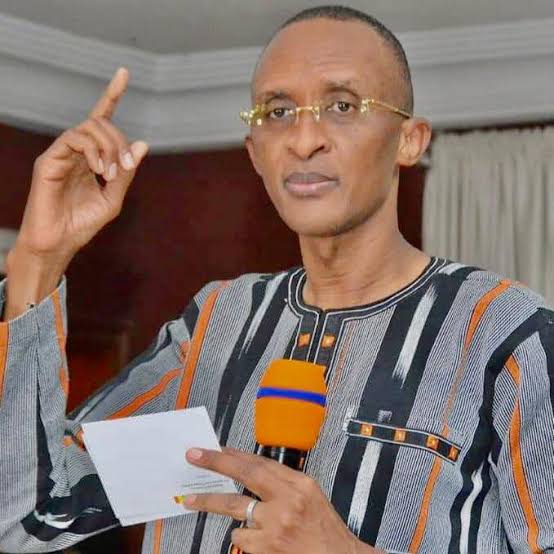
BRICS has consistently championed the principles of openness, inclusivity, cooperation, and mutual benefit. It has become a catalyst for safeguarding global peace, advancing shared prosperity, enhancing global governance, and facilitating the democratization of international relations. by Joseph Matthews With an expanded membership, BRICS has become a pivotal force in promoting global peace and stability, economic recovery, and governance, advocating for a more equitable and orderly multipolar world. Originally composed of Brazil, Russia, India, China, and South Africa, BRICS has grown into a significant international cooperation platform. Following its expansion in the past year, the new members have further strengthened BRICS’ influence. BRICS has consistently championed the principles of openness, inclusivity, cooperation, and mutual benefit. It has become a catalyst for safeguarding global peace, advancing shared prosperity, enhancing global governance, and facilitating the democratization of international relations. The group has also staunchly defended multilateralism and the free trade system while calling for reforms in global governance to amplify the voices of emerging markets and developing countries. The 16th BRICS Summit, taking place in the Russian city of Kazan from Tuesday to Thursday, marks the first top-level meeting following the group’s expansion. Recent statistics indicate that BRICS countries now account for about 30 percent of the global GDP, nearly half of the world’s population, and one-fifth of global trade. The summit is being held at a critical juncture, as the world faces two major conflicts — one in Europe and another in the Middle East — both of which have triggered significant global uncertainties. These conflicts, fueled by external players with vested interests, are worsening challenges like food security, economic instability, and disruptions in global supply chains. The summit offers a crucial opportunity for world leaders to advocate for political solutions to these conflicts. Dialogue and negotiation remain the only viable pathway to de-escalating these crises and preventing further harm to global peace and economic progress. Editor’s note: Joseph Matthews is a senior professor at the BELTEI International University in Phnom Penh, Cambodia. The views expressed in this article are those of the author’s and do not necessarily reflect those of Xinhua News Agency.
The appeal of the BRICS mechanism lies in the expanding influence of its members in the global political and economic system, while the mechanism offers an effective way for members to strengthen economic and trade exchanges and promote economic development, said Liang Guoyong, a senior economist with the United Nations Conference on Trade and Development. The BRICS mechanism plays a key role in promoting cooperation among developing countries and emerging markets against the background of global geopolitical turmoil, said a UN senior economist. The BRICS countries have become an important force in the world economic landscape, and their development experience is worth learning for the Global South countries, said Liang Guoyong, a senior economist with the United Nations Conference on Trade and Development, in a written interview with Xinhua. Cooperation in various fields among the BRICS countries has continued to deepen, and economic and trade exchanges between BRICS countries and other developing countries have continued to expand, Liang said, adding that the increasing international trade, investment, as well as scientific and technological exchanges have provided important opportunities for the economic development of all parties concerned. He said that the cooperation mechanism among the BRICS countries has transcended specific regions and become a core mechanism for cooperation among emerging economies, playing a positive role in building a more inclusive global economic and trade system. In the future, cooperation among the BRICS countries in new areas such as digital economy, artificial intelligence, cross-border payments and logistics will enable the mechanism to play a greater role in promoting international economic and trade cooperation, he added. The appeal of the BRICS mechanism lies in the expanding influence of its members in the global political and economic system, while the mechanism offers an effective way for members to strengthen economic and trade exchanges and promote economic development, he said. Liang expressed his belief that under the current situation, in order to promote economic and trade cooperation among developing countries and enlarge the development pie, it is necessary to give full play to the international cooperation mechanisms at all levels, especially BRICS. He said that the primary reason why South-South cooperation has once again become the focus of global attention in recent years is the increasing strength of the Global South countries, as South-South trade has accounted for nearly 40 percent of global trade. Also, South-South cooperation has become the main driving force for developing countries to strengthen cooperation in areas such as trade, investment and infrastructure construction, and the BRICS countries, including China, play an important role in this, he added. The expert said that China has become the world’s largest trading country and the largest exporter and the second-largest importer in goods trade, and its growing imports have provided an important driving force for the economic growth of other developing countries. At the same time, as one of the world’s largest foreign investors, China has provided important support for the industrialization and economic diversification of low-income countries, said Liang. In the past decade, the China-proposed Belt and Road Initiative and the establishment of financing institutions such as the Asian Infrastructure Investment Bank and the New Development Bank have effectively promoted economic and trade cooperation among developing countries, he said. Looking ahead, the economist said China will continue to play an important role in promoting the globalization process, stimulating world economic growth, and facilitating the implementation of the United Nations 2030 Agenda for Sustainable Development.■ Source: Xinhua
The BRICS mechanism plays a pivotal role in promoting a multipolar world, Ronnie Lins, director of the China-Brazil Center for Research and Business, has said.
Chinese President Xi Jinping on Wednesday called on BRICS countries to work for high quality development of greater BRICS cooperation, in a speech at the 16th BRICS Summit. Here is the full text of his speech. Embracing a Broader View and Cutting Through the Fog of Challenges to Advance High-Quality Development of Greater BRICS Cooperation Statement by H.E. Xi Jinping President of the People’s Republic of China At the XVI BRICS Summit Kazan, October 23, 2024 Your Excellency President Vladimir Putin, Colleagues, First of all, I wish to extend my warm congratulations on the successful opening of this summit. I also wish to thank President Putin and our host Russia for the thoughtful arrangements and warm hospitality. I would like to take this opportunity to once again welcome new members to our BRICS family. The enlargement of BRICS is a major milestone in its history and a landmark event in the evolution of the international situation. At this summit, we have decided to invite many countries to become partner countries, which is another major progress in the development of BRICS. As we Chinese often say, « A man of virtue regards righteousness as the greatest interest. » It is for our shared pursuit and for the overarching trend of peace and development that we BRICS countries have come together. We must make full use of this summit, maintain the momentum of BRICS and consider and devise our strategy to address issues that have a global impact, determine our future direction and possess strategic significance. We must build on this milestone summit to set off anew and forge ahead with one heart and one mind. As the world enters a new period defined by turbulence and transformation, we are confronted with pivotal choices that will shape our future. Should we allow the world to descend into the abyss of disorder and chaos, or should we strive to steer it back on the path of peace and development? This reminds me of a novel by Nikolay Chernyshevsky entitled What Is to Be Done? The protagonist’s unwavering determination and passionate drive are exactly the kind of willpower we need today. The more tumultuous our times become, the more we must stand firm at the forefront, exhibiting tenacity, demonstrating the audacity to pioneer and displaying the wisdom to adapt. We must work together to build BRICS into a primary channel for strengthening solidarity and cooperation among Global South nations and a vanguard for advancing global governance reform. – We should build a BRICS committed to peace and we must all act as defenders of common security. We humans are an indivisible community of security. Only by embracing the vision of common, comprehensive, cooperative and sustainable security can we pave the way for universal security. The Ukraine crisis still persists. China and Brazil, in collaboration with other countries from the Global South, initiated a group of Friends for Peace to address the crisis. The aim is to gather more voices advocating peace. We must uphold the three key principles: no expansion of the battlefields; no escalation of hostilities; and no fanning flames, and strive for swift deescalation of the situation. While the humanitarian situation in Gaza continues to deteriorate, the flames of war have once again been rekindled in Lebanon and conflicts are escalating among the parties. We must promote an immediate ceasefire and an end to the killing. We must make unremitting efforts toward a comprehensive, just and lasting resolution of the Palestinian question. – We should build a BRICS committed to innovation and we must all act as pioneers of high-quality development. As the latest round of technological revolution and industrial transformation is advancing at an accelerated speed, we must keep pace with the times and foster new quality productive forces. China has recently launched a China-BRICS Artificial Intelligence Development and Cooperation Center. We are ready to deepen cooperation on innovation with all BRICS countries to unleash the dividends of AI development. China will establish a BRICS Deep-Sea Resources International Research Center; a China Center for Cooperation on Development of Special Economic Zones in BRICS Countries; a China Center for BRICS Industrial Competencies; and a BRICS Digital Ecosystem Cooperation Network. We welcome active participation from all interested parties to promote the high-quality upgrading of BRICS cooperation. – We should build a BRICS committed to green development and we must all act as promoters of sustainable development. Green is the defining color of our times. It is important that all BRICS countries proactively embrace the global trend of green and low-carbon transformation. China’s high-quality production capacity, as exemplified by its manufacturing of electric vehicles, lithium batteries and photovoltaic products, provides a significant boost to global green development. China is willing to leverage its strengths to expand cooperation with BRICS countries in green industries, clean energy and green mining and promote green development through the entire industrial chain, so as to increase the « green quotient » of our cooperation and upgrade the quality of our development. – We should build a BRICS committed to justice and we must all act as forerunners in reforming global governance. The international power dynamics is undergoing profound changes, but global governance reform has lagged behind for a long time. We should champion true multilateralism and adhere to the vision of global governance characterized by extensive consultation, joint contribution and shared benefits. We must ensure that global governance reform is guided by the principles of fairness, justice, openness and inclusiveness. In light of the rise of the Global South, we should respond favorably to the calls from various countries to join BRICS. We should advance the process of expanding BRICS membership and establishing a partner country mechanism and enhance the representation and voice of developing nations in global governance. The current developments make the reform of the international financial architecture all the more pressing. BRICS countries should play a leading role in the reform. We should deepen fiscal and financial cooperation, promote the connectivity of our financial infrastructure and